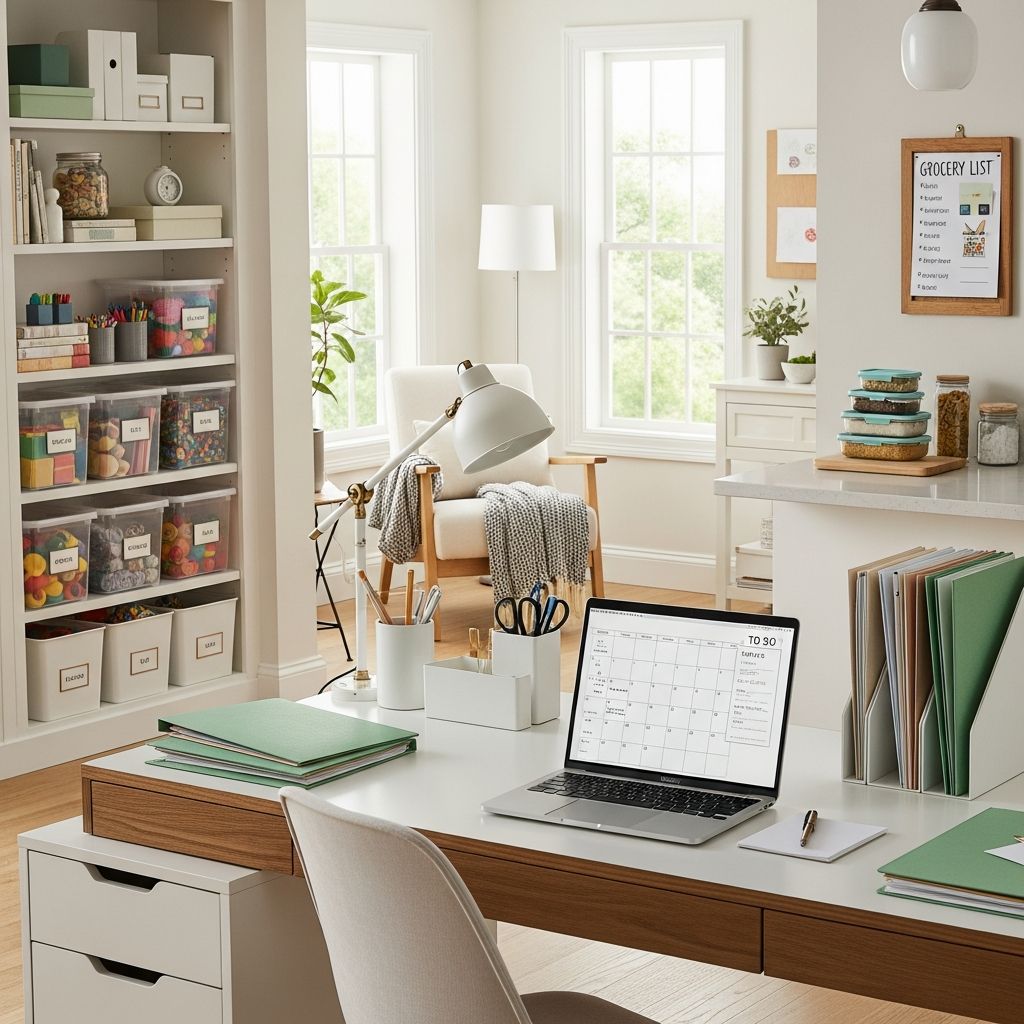
Parenting in today’s fast-paced world often feels like a non-stop whirlwind of schedules, meals, and endless chores. Maintaining an organized home can seem impossible amid school runs, work demands, and family activities. Yet, with targeted strategies, parents can create systems that save time, reduce stress, and foster a peaceful environment. These 10 approaches draw from proven methods used by families worldwide, emphasizing simplicity and sustainability.
Establish a Central Family Hub
The foundation of any organized home starts with a dedicated family hub, often called a command center. Position this near your main entryway for maximum visibility. Include a large wall calendar for tracking appointments, school events, and extracurriculars. Use color-coded markers—one hue per family member—to instantly spot conflicts or responsibilities.
Integrate slots for incoming mail, permission slips, and urgent notes using wall pockets or magnetic boards. Digital integration amplifies this: sync a shared online calendar app like Google Calendar with the physical display. This setup ensures everyone stays aligned, preventing last-minute scrambles. Parents report up to 30% less forgotten events after implementing such hubs.
- Choose a wall-mounted whiteboard for easy updates.
- Add hooks for keys and leashes below.
- Label sections clearly for school papers and bills.
Designate Entryway Landing Zones
Clutter begins at the door, so combat it with purposeful landing zones. Install over-door organizers or low shelves for shoes, backpacks, and coats. Assign personal cubbies to each child, labeled with names or photos for young ones. This ‘drop zone’ trains family members to unload immediately upon entering, curbing the spread of mess.
For added efficiency, include a ‘launch pad’ basket for next-day essentials like lunch bags or water bottles. In high-traffic homes, this simple change cuts morning prep time in half. Make it kid-friendly by placing items at waist height, encouraging independence.
Master Weekly Meal Mapping
Meal chaos drains energy; counter it with structured meal mapping. Dedicate Sunday evenings to plotting a week’s menu, factoring in preferences, allergies, and time constraints. Apps like Mealime generate shopping lists automatically, syncing with your grocery delivery service.
Prep staples in advance: chop veggies, portion proteins, and assemble freezer bags for quick thaws. Use clear, labeled bins in the fridge for grab-and-go snacks. Theme nights, such as ‘Meatless Monday,’ add fun and predictability. Families using this method report fewer impulse buys and less food waste.
| Day | Theme | Sample Meal | Prep Time |
|---|---|---|---|
| Monday | Meatless | Vegetable Stir-Fry | 20 min |
| Tuesday | Tacos | Beef Tacos | 15 min |
| Wednesday | Pasta | One-Pot Pasta | 25 min |
| Thursday | Soup | Chicken Noodle | 30 min |
Implement the Instant Task Rule
Small tasks snowball into big problems. Adopt the one-minute rule: if it takes under 60 seconds, do it now. Hang up a coat, file a receipt, or wipe a spill immediately. This habit prevents pile-ups and maintains momentum throughout the day.
For parents, apply it to kid-related chores like sorting a single drawing or restocking a diaper caddy. Over time, this builds a proactive mindset, transforming reactive cleaning into seamless maintenance.
Curate Toy Rotation Cycles
Too many toys overwhelm children and parents alike. Rotate them in cycles: store half in labeled bins under beds or in closets, swapping every two weeks. This renews interest, reduces visual clutter, and simplifies tidying.
Focus on quality over quantity—aim for 10-15 active toys. Involve kids in selecting rotation items to build ownership. Studies show rotation enhances play value and cuts cleanup time significantly.
- Bin 1: Building and puzzles.
- Bin 2: Pretend play figures.
- Bin 3: Arts and crafts.
Pre-Game Evenings for Smooth Mornings
Nightly prep is a game-changer for hectic dawns. After dinner, lay out tomorrow’s outfits in accessible drawers, pack lunches in insulated bags, and prep breakfast ingredients. Check the family hub for any updates.
This ritual, taking just 10 minutes, eliminates decision fatigue. Customize outfits weekly using drawer dividers labeled by day, streamlining choices for all ages.
Harness Vertical and Mobile Storage
Maximize space with vertical solutions: wall hooks, tension rods in closets, and over-door pockets. In the car, use backseat organizers for snacks, tablets, and wipes. These keep essentials handy without floor clutter.
For pantries, clear stackable bins reveal contents at a glance. Kid-accessible hooks at lower levels promote self-help.
Personalize Daily Baskets
Assign each child a portable daily basket for schoolwork, library books, and personal items. Place them in a central spot for evening review and morning grabs. This contains paper flow and ensures nothing gets lost.
Weekly, sort contents: file keepsakes in binders, recycle junk. This system scales with ages, from preschool art to tween homework.
Declutter with Family Rituals
Regular decluttering sustains order. Set monthly ‘donation dashes’—10-minute timers to fill bags with outgrown clothes or unused gadgets. Make it a game: who fills fastest wins a treat.
Teach the ‘one-in, one-out’ rule for new toys. This keeps inventory lean and purposeful.
Distribute Tasks via Visual Charts
Share the load with age-appropriate chore charts. Use pictures for toddlers, checklists for older kids. Color-code by person, posting near the hub. Rotate duties weekly to build skills and fairness.
Apps track completion with rewards. This instills responsibility, freeing parents for quality time.
Frequently Asked Questions (FAQs)
What if my kids resist organizing systems?
Involve them in setup—let them choose colors or labels. Start small, praise efforts, and model consistency to build buy-in over time.
How do I maintain these habits long-term?
Review monthly: tweak what works, ditch what doesn’t. Pair with family meetings to reinforce routines.
Are digital tools necessary?
Not essential, but apps enhance physical systems. Choose user-friendly ones to avoid added stress.
What’s the quickest win for beginners?
Entryway drop zones—immediate impact on daily flow with minimal investment.
Can these work in small homes?
Yes, prioritize vertical storage and multi-use items. Focus on high-impact zones like entry and kitchen.
References
- 10 Organization Hacks for Busy Parents — BabbleRoo. 2023. https://babbleroo.shop/blogs/babbleroo-blogs/organization-hacks-for-busy-parents
- 10 Organizing Hacks for Busy Parents — Popped Closet. 2023-06-01. https://www.poppedcloset.com/blog/10-organizing-hacks-for-busy-parents
- 10 Organizing Hacks for Parents — Clutterbug. 2015-11-01. https://clutterbug.me/2015/11/organizing-hacks-for-parents.html
- Organising for Busy Parents – 15 Hacks — The Decluttering Co. 2023. https://thedeclutteringco.com.au/organising-for-busy-parents/
- Tidy up, mama: The top 10 organizing hacks from Pinterest — Motherly. 2023. https://www.mother.ly/life/top-10-organizing-hacks-for-parents/
- 10 Parenting Tips for a More Organized Home — Bright Horizons. 2024-01-15. https://www.brighthorizons.com/article/lifestyle/simple-tips-for-better-organization