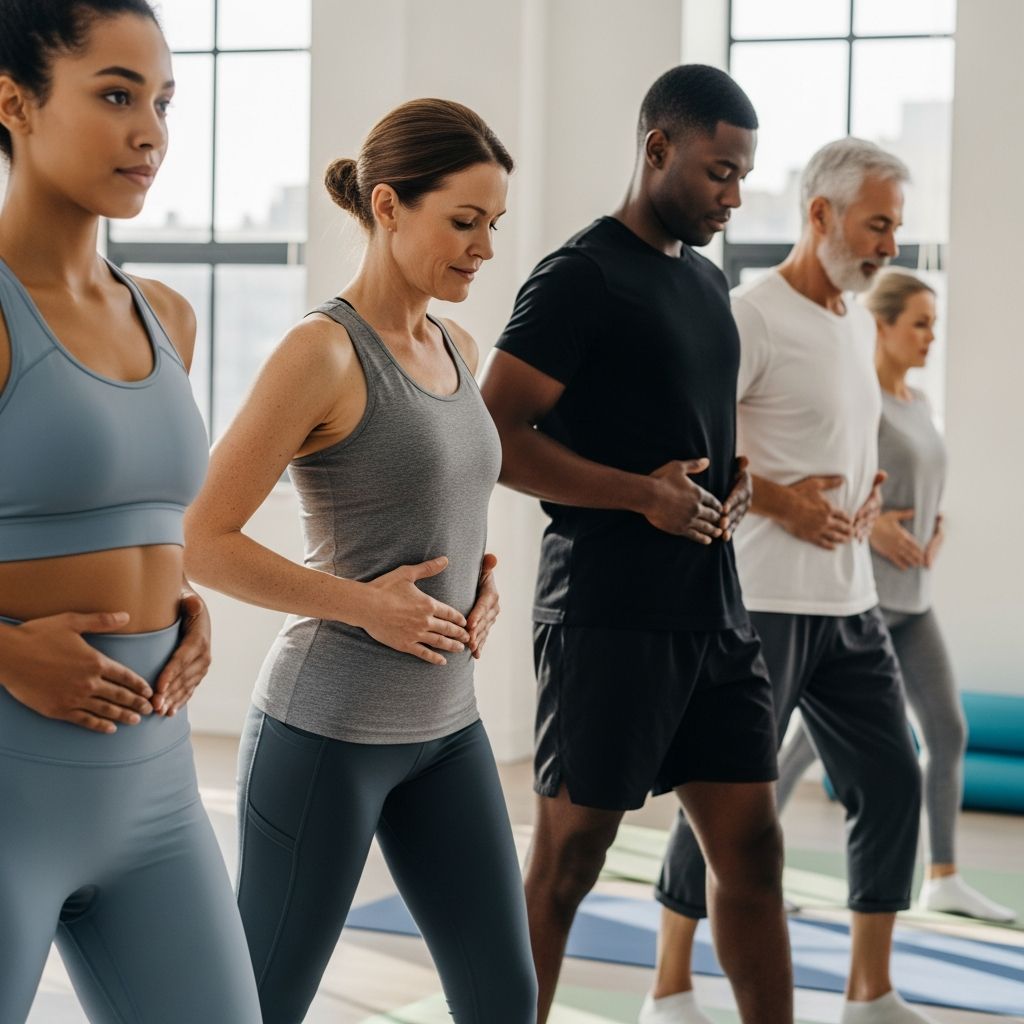
The pelvic floor comprises a group of muscles and tissues forming a supportive hammock at the base of the pelvis. These muscles are crucial for bladder and bowel control, sexual function, and maintaining organ positions. Weakness here can lead to incontinence, prolapse, or discomfort, affecting millions regardless of gender or age. Regular exercises can significantly improve strength and function, as supported by medical guidelines.
Why Prioritize Pelvic Floor Health?
Strong pelvic floor muscles prevent urine leakage during activities like coughing or laughing, reduce prolapse risk where organs shift downward, and enhance sexual satisfaction by improving muscle tone. Both men and women benefit; for instance, they aid prostate health post-surgery in men and postpartum recovery in women. Incorporating exercises daily yields results within weeks, with consistency key to long-term gains.
Common triggers of weakness include pregnancy, childbirth, aging, obesity, chronic coughing, or heavy lifting. Preventive training maintains resilience, while targeted routines address existing issues. Always consult a healthcare provider before starting, especially with pain or severe symptoms.
Essential Techniques for Identification and Basics
Locating pelvic floor muscles is step one: Imagine stopping urine mid-flow or tightening to prevent gas passage—these are your target muscles. Avoid clenching abdomen, buttocks, or thighs; keep those relaxed. Begin in comfortable positions like lying down, progressing to sitting or standing.
- Empty bladder first to avoid strain.
- Breathe steadily: Exhale during contraction, inhale to relax.
- Start with short holds, building duration and reps gradually.
Top 10 Pelvic Floor Strengthening Exercises
These exercises blend contraction, endurance, relaxation, and stretches for comprehensive training. Perform 3-5 sessions daily, aiming for 10 reps each unless specified.
1. Basic Kegel Holds
This foundational exercise builds endurance by sustaining contractions.
- Lie on back, knees bent, feet flat.
- Inhale deeply, exhale while tightening pelvic floor for 10 seconds.
- Relax fully for 10 seconds.
- Repeat 10 times, 3 times daily.
Progress to 3-5 second holds initially if 10 is challenging.
2. Bridge Lift
Bridges engage glutes, core, and pelvic floor for coordinated strength.
- Lie on back, knees bent, feet hip-width.
- Exhale, squeeze pelvic floor and glutes, lift hips to form a straight line from knees to shoulders.
- Hold 3-5 seconds, lower slowly.
- 10 reps.
This counters forward pelvic tilt from tight hip flexors.
3. Squat Activation
Squats build lower body and pelvic support while improving balance.
- Stand feet shoulder-width, toes slightly out.
- Exhale, hinge at hips, bend knees as if sitting back.
- Squeeze pelvic floor at bottom, push through heels to stand.
- 10-12 reps.
Keep depth comfortable to avoid strain.
4. Abdominal Bracing in Chair
This seated move stabilizes core and pelvic floor without equipment.
- Sit tall, feet flat.
- Inhale, exhale drawing belly button to spine while gently lifting pelvic floor.
- Hold 5 seconds, relax.
- 10 reps.
5. Pelvic Tilts
Tilts mobilize the pelvis, strengthening stabilizers.
- Lie on back, knees bent.
- Exhale, tilt pelvis to flatten lower back into floor.
- Inhale, release to neutral or slight arch.
- 10-15 alternations.
6. Standing Kegels
Functional training against gravity enhances real-world control.
- Stand feet hip-width, knees soft.
- Exhale, lift pelvic floor toward head.
- Hold 5-10 seconds, release.
- 10 reps.
7. Quick Flick Kegels
Rapid contractions train fast-twitch fibers for sudden pressure like sneezing.
- Lie or sit comfortably.
- Exhale, quickly contract and release pelvic floor (1 second each).
- 10 flicks, rest 10 seconds, 2-3 sets.
8. Heel Slides
Controlled slides engage deep core and pelvic floor.
- Lie on back, knees bent.
- Exhale, engage core and pelvic floor, slide one heel forward.
- Slide back, alternate legs 10-12 times.
9. Diaphragmatic Breathing
Deep breathing promotes relaxation and coordination.
- Lie down, hand on belly and chest.
- Inhale to expand belly (chest still), exhale fully relaxing pelvic floor.
- 10 breaths.
10. Happy Baby Pose Stretch
This gentle stretch releases tension.
- Lie on back, draw knees to chest, grab outer feet.
- Gently rock side to side, breathe deeply 30-60 seconds.
Sample Weekly Routine Table
| Day | Morning (10 min) | Afternoon (10 min) | Evening (10 min) |
|---|---|---|---|
| Monday | Basic Kegels, Bridges | Squats, Abdominal Bracing | Pelvic Tilts, Standing Kegels |
| Tuesday | Quick Flicks, Heel Slides | Diaphragmatic Breathing, Happy Baby | Basic Kegels, Bridges |
| Wednesday | Rest or Light Breathing | Squats, Abdominal Bracing | Pelvic Tilts, Standing Kegels |
| Thursday | Basic Kegels, Bridges | Quick Flicks, Heel Slides | Diaphragmatic Breathing, Happy Baby |
| Friday | Squats, Abdominal Bracing | Pelvic Tilts, Standing Kegels | Basic Kegels, Bridges |
| Weekend | Full Circuit (Choose 5-6) | Rest/Stretches | Quick Flicks Focus |
Adjust based on progress; increase holds by 2 seconds weekly.
Progression and Common Mistakes
Week 1: Focus on form with 3-5 second holds. Week 4: Aim for 10 seconds, add resistance like cones if appropriate. Mistakes include breath-holding, over-squeezing non-target muscles, or ignoring relaxation phases—balance is vital to avoid tightness. Track improvements in leakage or comfort.
- Too tight? Incorporate more stretches like Happy Baby.
- No progress? Seek pelvic floor therapy.
Frequently Asked Questions
Can men do pelvic floor exercises?
Yes, Kegels benefit men by improving continence post-prostatectomy and erectile function.
How soon do results appear?
Many notice changes in 4-6 weeks with daily practice.
Are Kegels safe postpartum?
Wait 6 weeks or until cleared by a doctor; start gently.
What if I feel pain?
Stop and consult a professional—pain signals improper form or underlying issues.
Can I do these during pregnancy?
Yes, they support delivery and recovery, but get tailored advice.
Advanced Tips for Optimal Results
Integrate into daily life: Contract during waits in line or drives. Combine with overall fitness for synergy. Biofeedback apps or therapy amplify effectiveness for stubborn cases. Nutrition matters—stay hydrated, manage constipation to lessen strain. Long-term, these habits safeguard against age-related decline.
Pelvic health is foundational wellness. Commit to these exercises for empowered control and vitality.
References
- Pelvic floor muscle training exercises — MedlinePlus (U.S. National Library of Medicine). 2023-10-01. https://medlineplus.gov/ency/article/003975.htm
- 10 Pelvic Floor Exercises: Kegels & More for Pelvic Health — Hinge Health. 2024-05-15. https://www.hingehealth.com/resources/articles/best-exercises-for-pelvic-floor/
- 5 Pelvic Floor Exercises for Anyone and Everyone — Healthline. 2023-08-20. https://www.healthline.com/health/fitness-exercise/pelvic-floor-exercises
- Pelvic Floor Strengthening 3B: Quick Flicks & Endurance Holds — YouTube (Pelvic Health Expert). 2022-11-10. https://www.youtube.com/watch?v=RbwyfEj-Oy4
- How to do pelvic floor exercises | NHS — NHS (YouTube). 2023-02-14. https://www.youtube.com/watch?v=JFJtUtKQCuM
- Kegel Exercises: Benefits, How To & Results — Cleveland Clinic. 2023-02-01. https://my.clevelandclinic.org/health/articles/14611-kegel-exercises