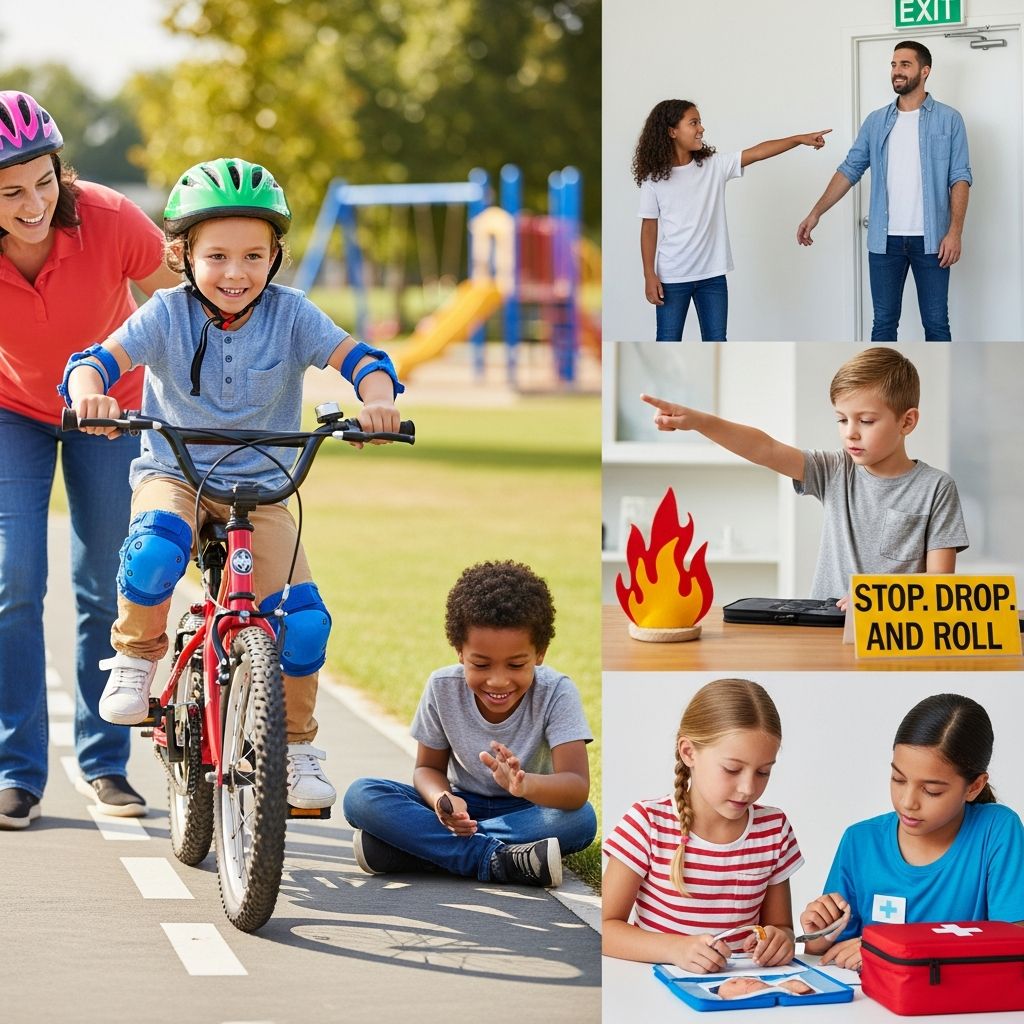
Teaching children safety skills is one of the most important gifts parents can give. These abilities empower kids to handle everyday risks with poise, reducing accidents and building lifelong confidence. In a world full of parks, schools, homes, and digital spaces, preparing children means focusing on practical, age-appropriate lessons that turn potential hazards into manageable moments.
From recognizing unsafe situations to knowing when to seek help, these skills form a foundation for independence. Parents play a key role by practicing scenarios calmly and consistently, ensuring children internalize the lessons without fear. This guide outlines **10 essential safety skills**, drawing from expert recommendations and recent safety initiatives, to help your family thrive securely.
Building a Strong Safety Foundation at Home
The home is the first line of defense and learning ground. Simple rules prevent common accidents like falls, burns, or poisoning, which account for a significant portion of childhood injuries. Start by designating safe zones and no-touch items.
- Identify household hazards: Show children cleaning supplies, medications, and hot appliances as off-limits. Practice phrases like “Stop, don’t touch, tell an adult.”
- Door and stranger protocols: Teach kids never to open doors to unknown visitors. Role-play yelling for help if needed.
- Emergency contacts: Memorize phone numbers and locations of safe rooms, like a parent’s bedroom.
These habits foster responsibility. According to safety guidelines, early home training reduces injury risks by up to 50% in young children.
Navigating Public Spaces with Awareness
Crowded stores, events, and streets demand quick thinking. Lost children in public areas often panic, but preparation changes that.
| Situation | Safety Action | Why It Works |
|---|---|---|
| Getting separated | Stay put or find a uniformed staff member | Reduces wandering and speeds reunion |
| Approached by unknown person | Say “No,” run to adult, yell if grabbed | Alerts bystanders effectively |
| Car rides | Seatbelts always, no doors during motion | Prevents ejections in accidents |
Practice these in low-stakes outings. Visual aids like ID cards with parent contacts add security.
Playground and Outdoor Adventure Rules
Parks offer joy but hidden risks like rough play or equipment misuse. Equip kids to enjoy freely.
- Stay in sight: Agree on boundaries before play.
- Equipment checks: Avoid broken swings or wet slides.
- Bullying response: Walk away, tell a supervisor.
Recent programs emphasize group play for mutual vigilance.
School and Group Travel Precautions
School commutes and activities require group awareness. Walking in pairs cuts risks significantly.
- Buddy system: Never go alone to bathrooms or remote areas.
- Report unease: Teachers are safe contacts for any worry.
- Belongings guard: Keep bags close, know contents.
New school policies mandate training on boundaries.
Digital World Protections
Online spaces grow riskier. The Kids Online Safety Act pushes platforms for parental controls.
- Privacy basics: No sharing locations or photos with strangers.
- App usage: Use family safety apps for check-ins.
- Screen time limits: Avoid addictive features like infinite scrolls.
Training like Safe and Strong equips caregivers for online threats.
Personal Body Autonomy Lessons
Respecting personal space prevents abuse. Clear rules build assertiveness.
- No secrets: Private parts are off-limits; tell if touched.
- Consent practice: “No” means stop for hugs or games.
- Trusted reporters: Name 3-5 safe adults.
Prevention campaigns integrate this into health visits.
Emergency Response Drills
Fires, injuries, or natural events need calm action. Drills make response automatic.
- Stop, drop, roll: For clothing fires.
- Evacuation paths: Practice twice yearly.
- First aid basics: Cover cuts, call for severe issues.
Street and Transportation Smarts
Urban navigation demands vigilance. Look left-right-left at crossings.
| Age Group | Key Rules |
|---|---|
| Under 7 | Hold hands, no darting |
| 7-10 | Pedestrian signals, group walks |
| Over 10 | Bike helmets, traffic apps |
Weather and Nature Awareness
Storms or wildlife require caution. Teach lightning rules: 30-30 sees thunder.
- Indoor safety: Avoid windows, plumbing in storms.
- Animal encounters: Back away slowly from strays.
Health and Self-Care Habits
Hygiene and injury prevention tie into safety. Wash hands, report illnesses promptly.
Updated immunization schedules support overall wellness.
Frequently Asked Questions (FAQs)
What age should I start safety training?
Begin with simple rules around age 3, advancing complexity by 7-8. Tailor to developmental readiness.
How do I teach without scaring my child?
Use stories, games, and praise confident responses. Focus on empowerment.
Are safety apps recommended?
Yes, for location sharing and alerts, but pair with direct teaching.
What if my child forgets in the moment?
Practice repeatedly; muscle memory kicks in under stress.
How do schools fit into this?
Collaborate with teachers; new laws enhance training.
Integrating Skills into Daily Routines
Consistency is key. Morning checklists, bedtime reviews, and family meetings reinforce learning. Track progress with charts, rewarding milestones. Community programs like Safety S.T.A.R.S. offer structured support.
By 2026, expect more state mandates on online and school safety. Stay informed via official updates.
These **10 skills**—home rules, public navigation, playground smarts, school precautions, digital guards, body autonomy, emergencies, streets, weather, and health—create resilient kids. Parents’ calm guidance ensures adoption.
References
- Safety Tips for Kids Every Parent Should Know About In 2026 — NauNauSOS App. 2026. https://naunausosapp.com/safety-tips-for-kids-every-parent-should-know-about-in-2026/
- Text – S.1748 – 119th Congress (2025-2026): Kids Online Safety Act — U.S. Congress. 2025. https://www.congress.gov/bill/119th-congress/senate-bill/1748/text
- FOR APPROVAL Projects We Support 2026 — Childhood USA. 2026. https://www.childhood-usa.org/for-approval-2026-projects-we-support/
- Governor to Decide on Sweeping New Child Safety, Hiring, and Compliance Rules for California Private Schools — LCW Legal. 2026. https://www.lcwlegal.com/news/governor-to-decide-on-sweeping-new-child-safety-hiring-and-compliance-rules-for-california-private-schools/
- What to Expect from US States on Child Online Safety in 2026 — Tech Policy Press. 2026. https://techpolicy.press/what-to-expect-from-us-states-on-child-online-safety-in-2026
- CDC Acts on Presidential Memorandum to Update Childhood Immunization Schedule — CDC. 2026. https://www.cdc.gov/media/releases/2026/2026-cdc-acts-on-presidential-memorandum-to-update-childhood-immunization-schedule.html